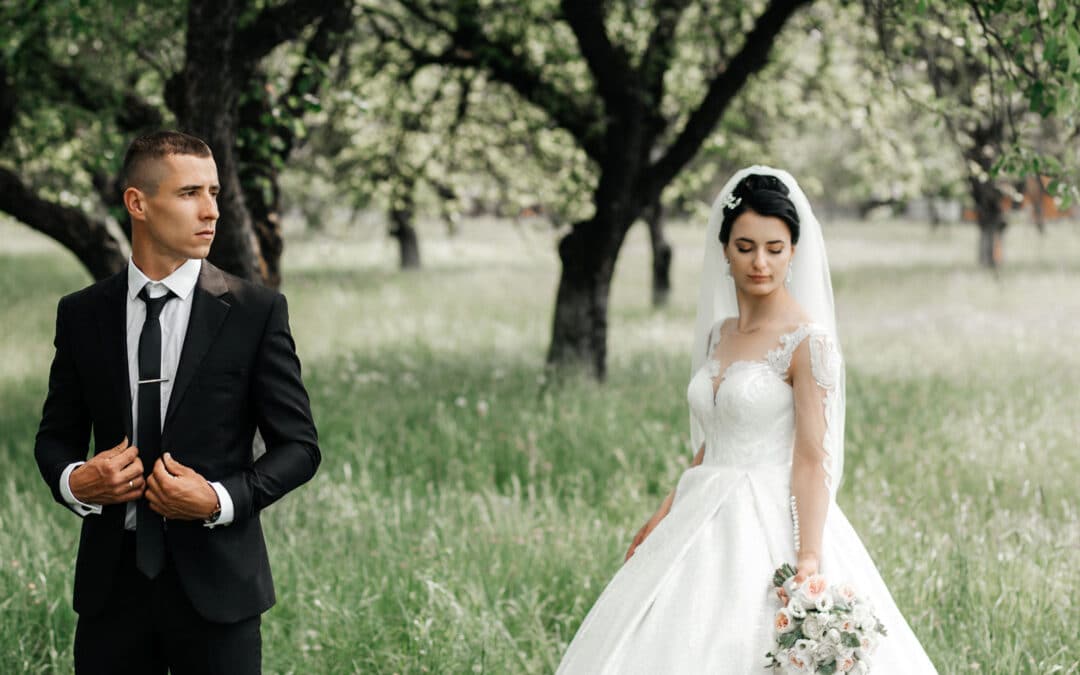
When you choose a garden wedding venue, you’re selecting that space because of its existing beauty. The mature trees, established plantings, and natural landscape elements are features, not problems to solve. Your decor should enhance these elements, creating focal points and adding personal touches without overwhelming the natural setting.
This concept connects directly to the growing trend of garden weddings, where couples specifically seek outdoor settings that minimize the need for artificial decoration and celebrate the beauty of the natural world. Let’s talk more about it!
Understanding Your Garden Venue’s Natural Assets
Before planning any decor, take time to truly see your garden venue’s existing features. Different spaces offer different natural advantages that should guide your decoration decisions.
Assess the Landscape
Visit your venue during the season when you’ll be getting married. Notice:
- Which plants will be in bloom during your wedding month
- The natural color palette the landscape provides
- Existing focal points like mature trees, water features, or architectural elements
- Natural gathering spaces and sight lines
- How light moves through the space at different times of day
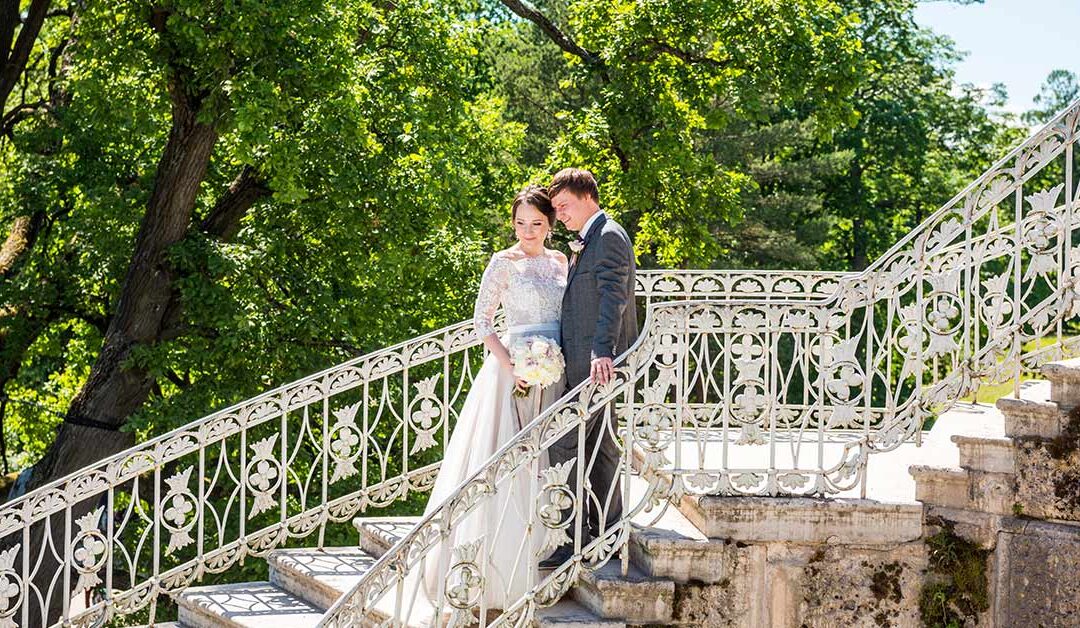
A venue like the Pine Tree Garden showcases how established gardens provide their own spectacular decoration, particularly during spring and summer when plants are at their peak.
Work With, Not Against, the Setting
Your decor should complement the garden’s existing style:
Formal Gardens: Call for more structured arrangements and classic elegance
Cottage Gardens: Great for romantic, slightly wild floral arrangements and eclectic details
Modern Landscapes: Work best with clean lines and contemporary design elements
Wooded Settings: Pair beautifully with organic materials and natural textures
Fighting against your venue’s inherent style creates visual dissonance. Embracing it creates harmony.
Strategic Decor Placement
In garden settings, less is genuinely more. Strategic placement of key decor elements creates visual interest without cluttering the natural beauty.
Ceremony Space Enhancement
Your ceremony area needs just enough decoration to define the space and create a focal point without overshadowing the natural surroundings.
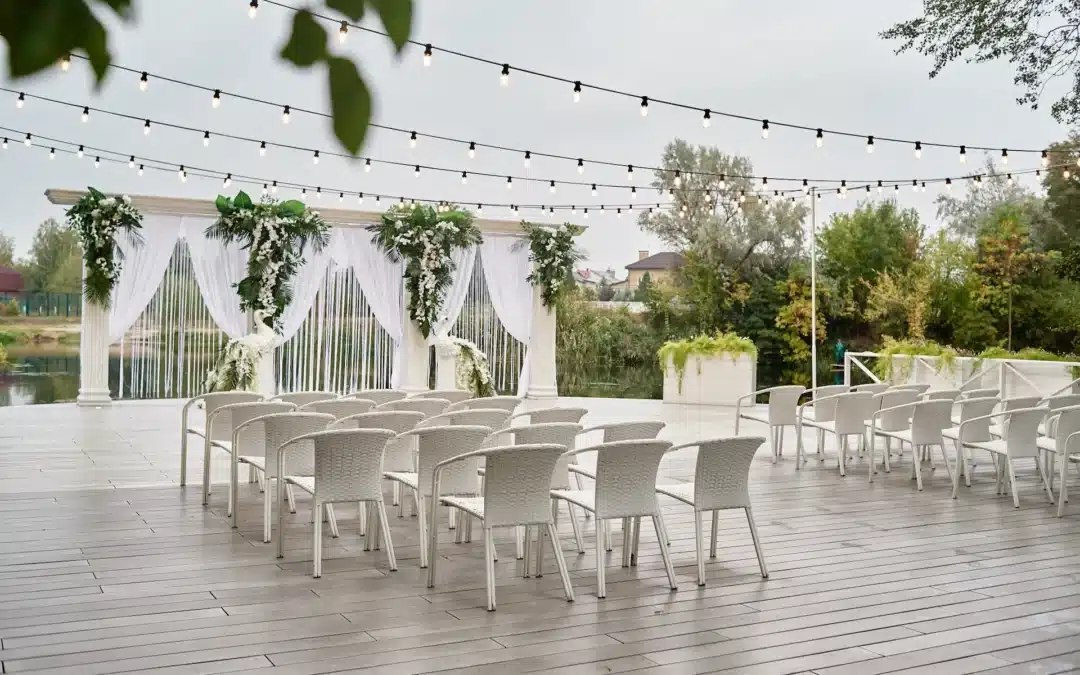
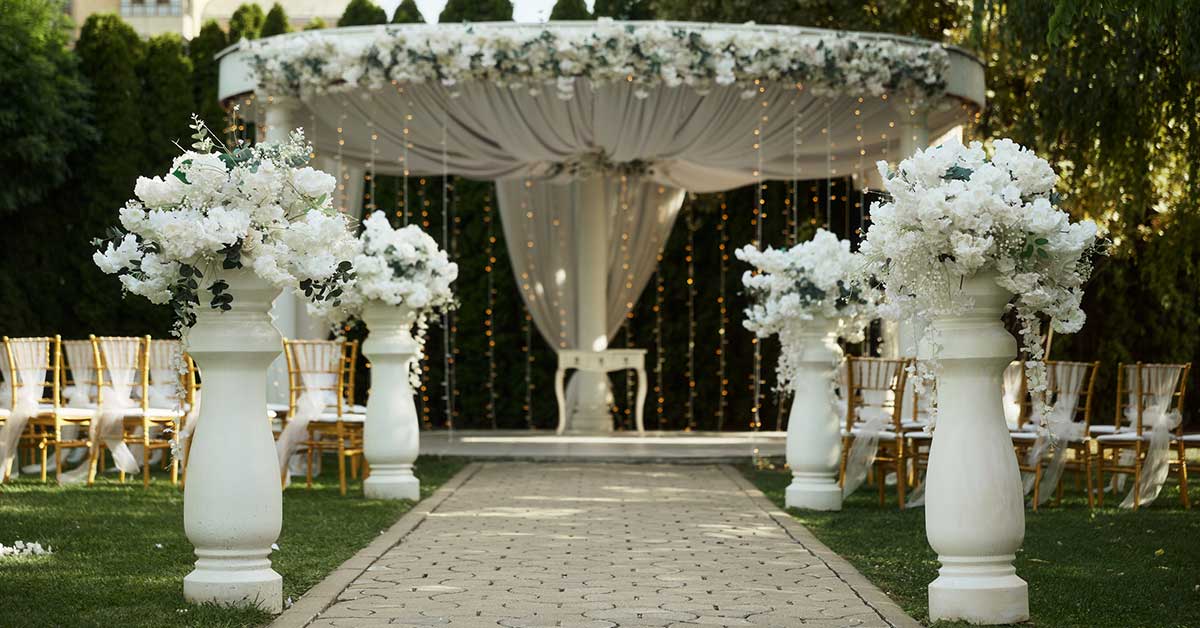
Ceremony Arch or Backdrop: Instead of massive floral installations, consider:
- Simple wooden arches adorned with greenery and minimal flowers
- Natural branches or driftwood that echo the organic setting
- Fabric draping in neutral tones that adds softness without competing with nature
- Or skip the arch entirely if your venue offers a stunning natural backdrop
Aisle Definition: Mark the aisle subtly:
- Petals scattered along the path
- Small arrangements every few rows rather than lining the entire aisle
- Simple lanterns or shepherd’s hooks with minimal florals
- Natural elements like potted plants or stones
The goal is guiding guests’ eyes toward the ceremony without creating barriers to the natural view.
Reception Area Touches
Your reception space benefits from decor that creates intimacy and defines areas without overwhelming the garden setting.
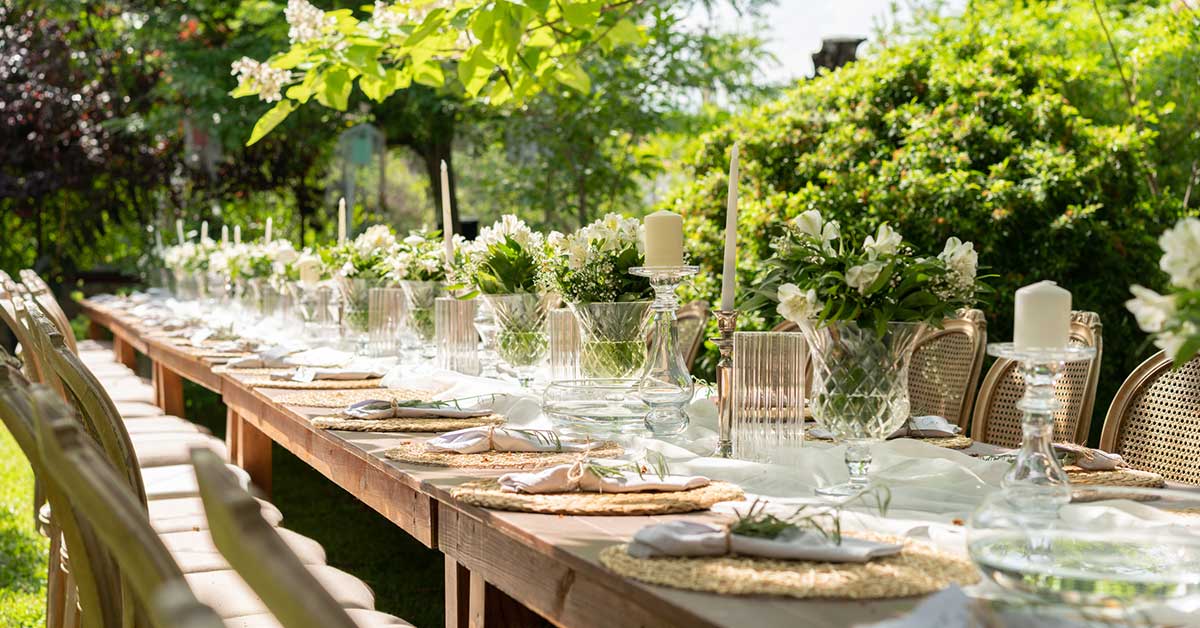
Table Settings:
- Low centerpieces that don’t block sightlines to the surrounding garden
- Mix of candles and florals for visual interest
- Natural materials like wood slices, stone, or terracotta
- Linens in colors that complement rather than compete with the landscape
Lighting Strategy: Garden receptions truly shine when lighting enhances rather than dominates:
- String lights that add sparkle without harsh brightness
- Lanterns that create pools of warm light
- Candles in hurricane vases for safety and ambiance
- Uplighting on key trees or architectural features
Creating Distinct Zones
Use minimal decor to define different areas within your garden space:
- A cozy lounge area with thoughtfully arranged furniture and soft lighting
- A bar or beverage station marked by larger arrangements or signage
- Pathways indicated by subtle lighting or occasional florals
- Photo opportunities at natural focal points enhanced with simple touches
Floral Design That Complements the Garden
Your floral arrangements should feel like natural extensions of the garden rather than imported decorations that could exist anywhere.
Choosing Garden-Appropriate Flowers
Select blooms that make sense in an outdoor setting:
- Flowers that might naturally grow in a garden setting
- Seasonal options that align with what’s blooming around you
- Colors that harmonize with the natural landscape
- Textures that feel organic rather than overly manicured
Spring Garden Florals: Tulips, ranunculus, garden roses, lilac, sweet peas, and flowering branches that echo the season’s natural blooms
Summer Garden Florals: Hydrangea, dahlias, zinnias, cosmos, garden roses, and wildflower-style arrangements that feel abundant yet natural
Fall Garden Florals: Dahlias, chrysanthemums, seasonal foliage, berries, and branches that celebrate autumn’s richness
Arrangement Style Matters
The style of your floral arrangements should reflect the garden aesthetic:
For Formal Gardens:
- More structured arrangements with clear forms
- Classic flower choices in sophisticated color palettes
- Uniform heights and symmetrical placements
For Cottage or Natural Gardens:
- Loose, organic arrangements that look freshly gathered
- Mix of flower types and textures
- Varying heights and asymmetrical designs
- Include herbs and greenery for an authentic garden feel
Quantity Considerations
Garden venues need less floral decoration than indoor spaces. The natural surroundings provide so much visual interest that you can focus florals in key areas:
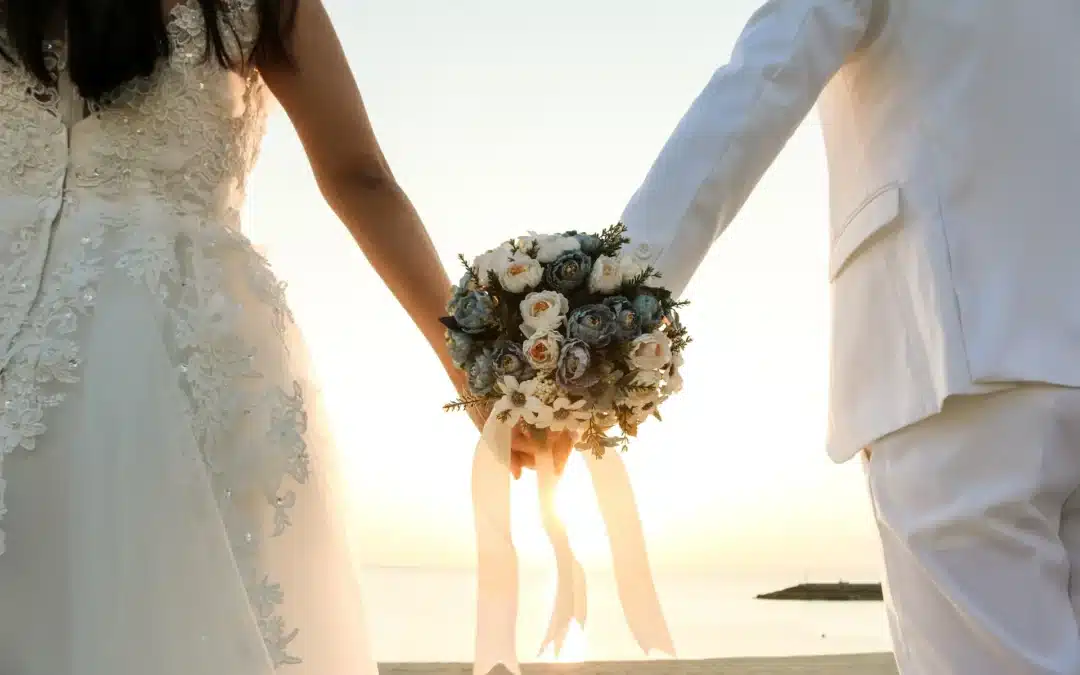
- Bridal party bouquets and boutonnieres
- Ceremony focal point (arch, altar, or nearby areas)
- Reception centerpieces (keep them low and simple)
- Cocktail area (one or two statement pieces)
You don’t need flowers everywhere. In fact, having them everywhere dilutes their impact and fights against the garden setting.
Color Palette Selection
Your color choices should work in harmony with the garden’s natural palette during your wedding season.
Complementary Color Strategies
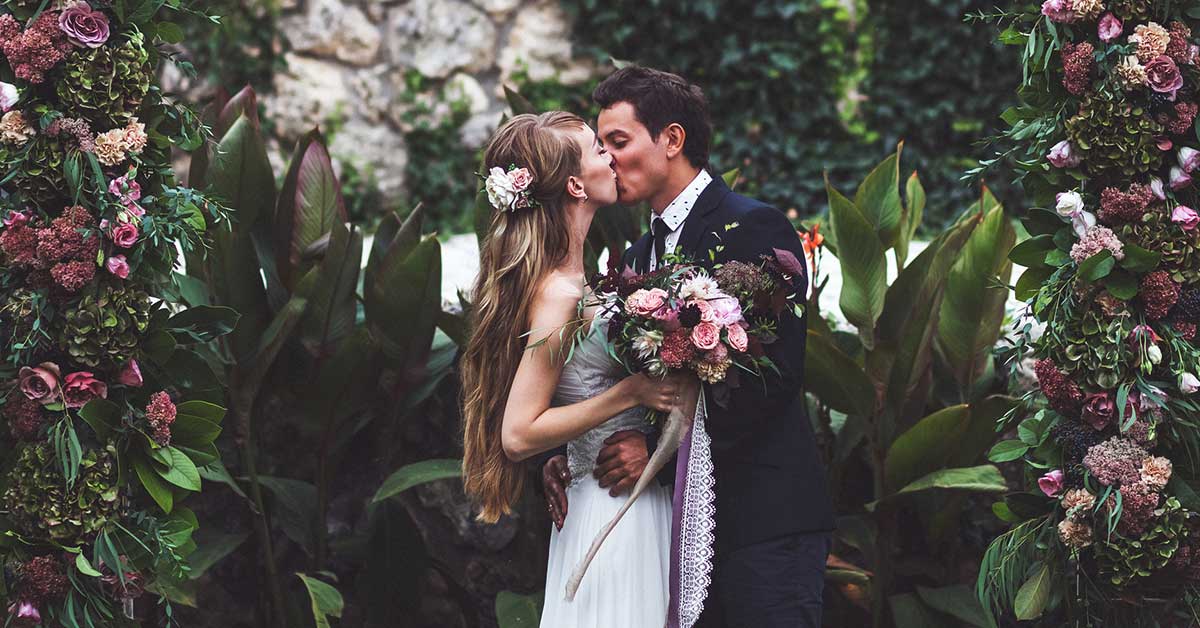
Monochromatic with Nature: Use varying shades of colors already present in the garden. If flowering trees provide pink blooms, use blush, rose, and deep pink in your decor.
Neutral Enhancement: Stick to whites, creams, greens, and natural wood tones that complement any garden setting without competing for attention.
Accent Color Approach: Choose one accent color that pops against the garden’s natural greens and earth tones, using it sparingly for maximum impact.
Seasonal Harmony: Embrace the colors nature provides in each season:
- Spring: Soft pastels, fresh greens, lilac, and blush
- Summer: Vibrant jewel tones, coral, and warm neutrals
- Fall: Rich burgundy, gold, amber, and deep green
Avoid color schemes that clash with the natural setting. A garden in full green summer bloom doesn’t pair well with stark black and white, while a fall garden might look odd with bright spring pastels.
Seasonal Decor Considerations
Each season offers unique opportunities for garden wedding decor:
Spring Garden Decor
Embrace the season of renewal:
- Fresh greenery and spring blooms in abundance
- Light, airy fabrics and colors
- Minimal additional decoration needed when gardens are in peak bloom
- Focus on celebrating rather than competing with nature’s show
Summer Garden Decor
Work with summer’s vibrancy:
- Bold colors that hold their own against lush greenery
- Cooling elements like fans or misting stations become part of your decor
- Evening lighting becomes crucial for extending celebrations
- Hydration stations can be styled as decor elements
Fall Garden Decor
Celebrate autumn’s richness:
- Incorporate seasonal elements like branches, berries, and fall foliage
- Warm lighting that enhances the golden quality of fall
- Textures that feel cozy and inviting
- Colors that echo the changing landscape
Creating Your Perfect Garden Wedding
Garden wedding decor succeeds when it celebrates and enhances the natural beauty of your venue while adding personal touches that make the space feel like yours. This balance requires restraint, thoughtful planning, and a willingness to let nature take center stage.
Whether you’re planning an intimate celebration at an elopement venue or a larger gathering in a private event space, the principles remain the same: complement, don’t compete – and let the garden’s natural beauty shine.
The result is a celebration that feels authentically connected to its setting, photographically stunning, and memorable for all the right reasons.
Ready to plan your garden wedding? Contact us today to discover how Ainsworth House & Gardens provides the perfect natural backdrop for your celebration.